Rasmus Schnoor-Madsen


University of Southern Denmark
Cohort 2026
Supervisor
Daniel Wæstner
Trafficking and function of oxysterols and cholesterol sulfate in atherogenesis
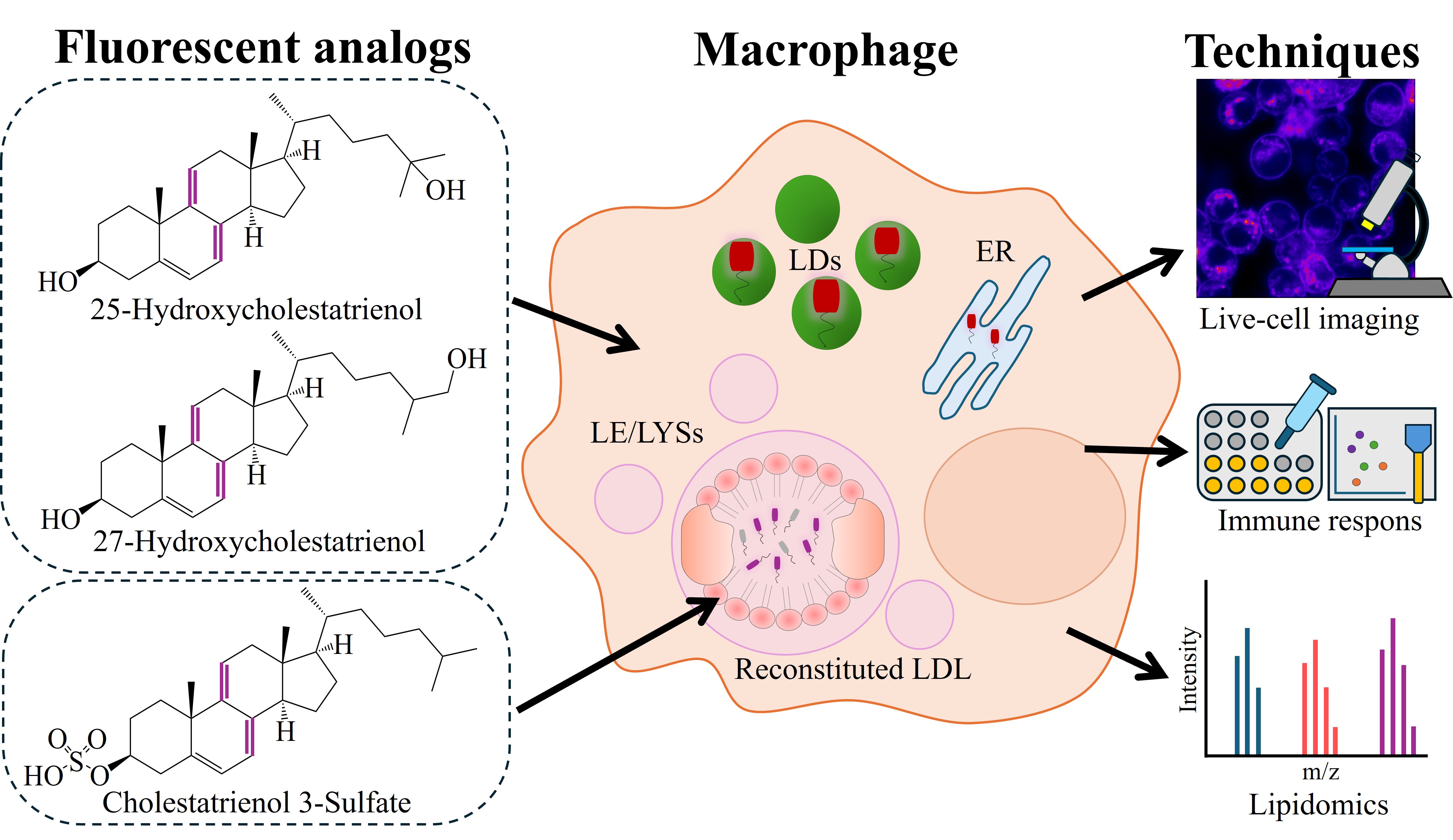
Atherosclerosis is a disease in which plaques build up within the arteries, leading to thickening and narrowing of the arterial walls that can result in cardiovascular disease and stroke. Macrophages are found within these plaques, where they take up lipids and proteins. Excessive lipid uptake leads to the formation of foam cells. Cholesterol and its metabolites, e.g. oxysterols and cholesterol sulfate (Chol-S), play a major role in progression of atherosclerosis.
Oxysterols and Chol-S are implicated in atherosclerosis, but their roles remain poorly understood. Oxysterols appear to exert both pro- and anti-atherogenic effects on cholesterol metabolism and foam cell formation, while the trafficking and function of Chol-S have not been investigated. Understanding these mechanisms may reveal novel pathways driving atherosclerosis.
The first aim is to dissect the trafficking routes of oxysterols and Chol-S within and between macrophages using fluorescent analogs of the native sterols and evaluate their inflammatory responses. The second aim is to determine how oxysterols and Chol-S influence the uptake of lipoproteins by macrophages. Finally, changes in cellular lipid composition induced by these sterols will be characterized by mass spectrometry.