Louise Hansen


University of Southern Denmark
Cohort 2026
Supervisor
Søren Fisker Schmidt
In Vivo Engineering of MASLD-Relevant Adipose Stem Cell States Using Synthetic Enhancers
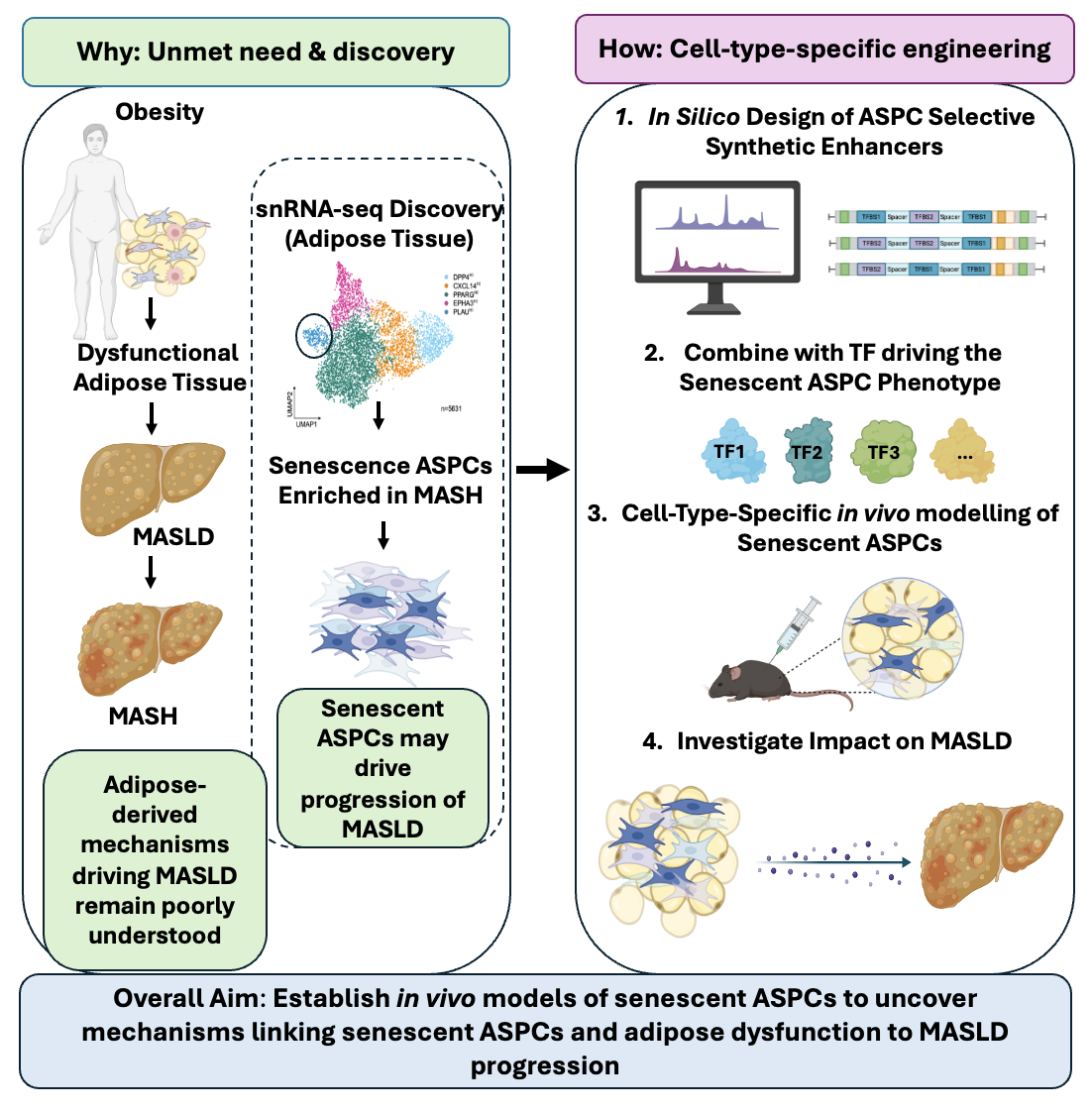
Metabolic dysfunction-associated steatotic liver disease (MASLD) affects up to 75% of people with obesity, yet adipose drivers of severe progression remain unclear. Our recent single nucleus RNA-seq study has identified a senescent-like adipose progenitor and stem cells (ASPCs) subpopulation enriched in advanced MASLD, suggesting a potential adipose-to-liver axis promoting disease severity.
This project aims to establish in vitro and in vivo models of senescent-like ASPCs to investigate their contribution to adipose tissue dysfunction and MASLD progression. By characterizing their metabolic and secretory phenotypes, we seek to uncover mechanisms linking adipose dysfunction to liver disease severity and explore their therapeutic potential.
Synthetic enhancers will be engineered through in silico analysis to enable precise, ASPC-specific in vivo delivery of in vitro-validated transcriptional drivers of the senescent ASPC phenotype. Histological, transcriptional analyses, and metabolic analyses will validate population establishment and determine impact on progression of metabolic dysfunction and MASLD.