Leticia Hartmann

University of Copenhagen
Cohort 2026
Supervisor
Thomas Lavstsen
Dynamic Virulence in Plasmodium falciparum Malaria
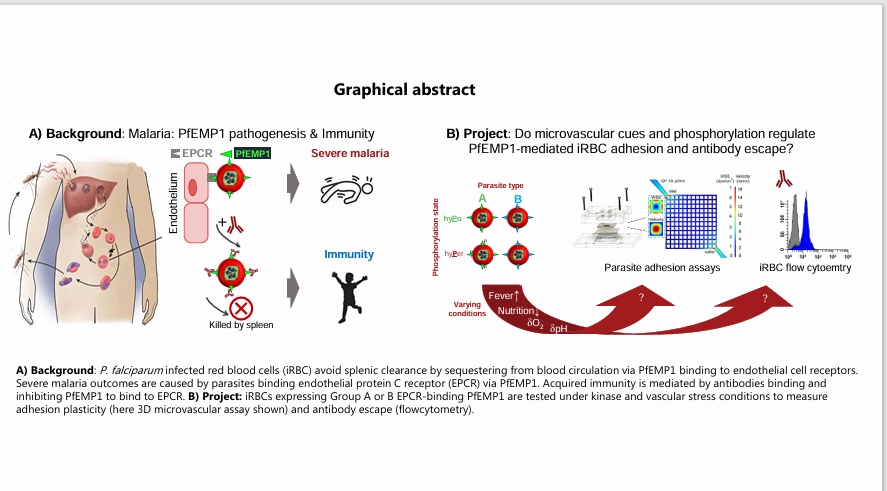
Malaria becomes life-threatening when parasite-infected red blood cells attach to the walls of blood vessels, allowing them to avoid removal by the spleen. This project challenges the common assumption that the „stickiness“ of responsible proteins is static. Instead, we hypothesize that interactions with vessels are dynamically regulated by parasites in response to fever, inflammation, or immune pressure.
This cytoadhesion process is central to severe forms of malaria, as it helps parasites evade immune detection while maintaining vascular attachment. Emerging evidence suggests that parasites may actively tune the behavior of these surface proteins. Uncovering how parasites control adhesion will enable the development of vaccines and therapies that disrupt this critical step in disease.
To test this hypothesis, we will combine parasite genetics, protein biochemistry, advanced microscopy, and 3D models of human blood vessels. By exposing parasites to physiologically relevant conditions and measuring how their adhesive properties change, we aim to uncover previously unknown mechanisms that control virulence.