Emil Fredfeldt


University of Copenhagen
Cohort 2026
Supervisor
Asger Dag Törnquist
Hyper-turbulence and complexity in dynamical systems
In our society, we make predictions about the future on the basis of partial information all the time. Describing when systems are so complex, that such predictions can only be accurately made a short time into the future, has been done using the mathematical theory of turbulence. Our goal is to develop a hyper-turbulence theory, capable of distinguishing complex systems from very complex ones.
The existing turbulence theory describes simple dynamical systems but not complex ones. Developing this hyper-turbulence theory would give a much better understanding of many complex dynamical systems and could thus impact any scientific field trying to predict the future of a complex system, like the climate or a sick human. It further connects to several important open problems in mathematics.
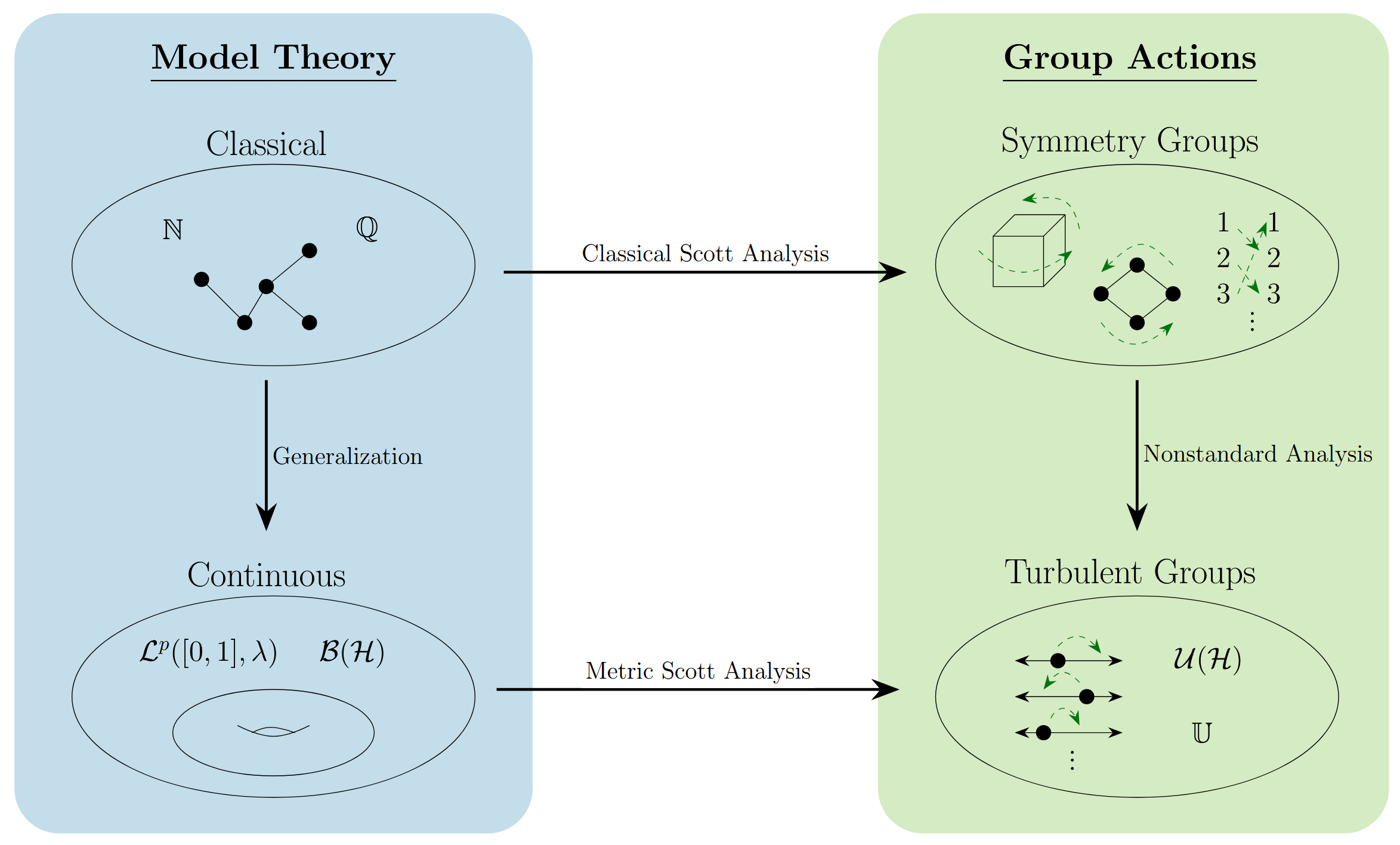
By connecting emerging ideas in Continuous Model Theory with Polish group actions, we will adapt the methods of the original turbulence theory to a continuous setting. A key ingredient in this approach will be to describe the theory of Polish group actions using nonstandard analysis, which facilitates lifting the originally discrete methods to continuous methods.